Tel: +255 658 935 114

Home > Wildife Safaris Articles > Understanding the Great Migration: Wildebeest, Zebras, and Seasonal Patterns
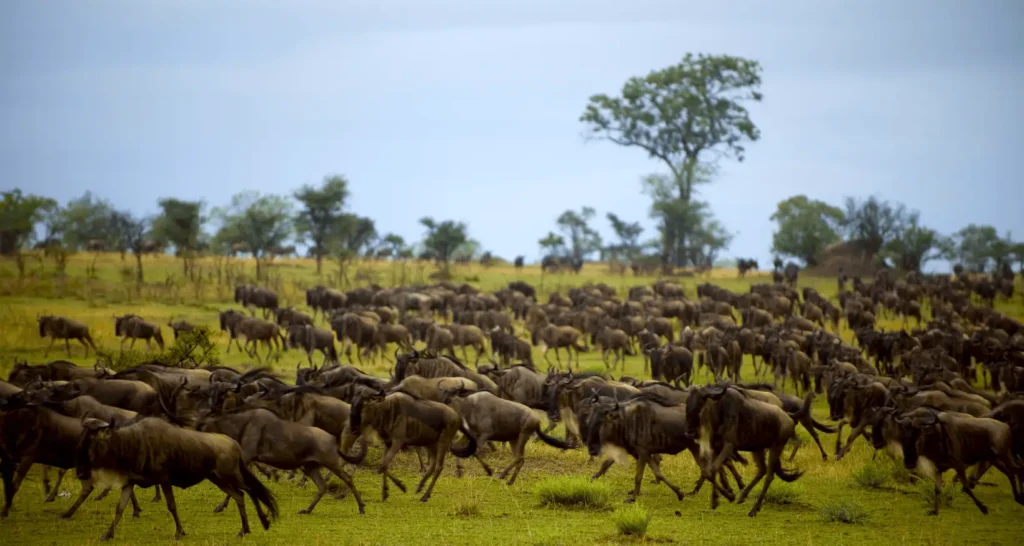
Few wildlife spectacles on Earth rival the grandeur of Tanzania’s Great Migration. Every year, over 1.5 million wildebeest, accompanied by hundreds of thousands of zebras and gazelles, traverse the Serengeti-Mara ecosystem in search of lush grazing and water. This extraordinary natural phenomenon is not only a visual marvel but also a vital ecological process that sustains predator-prey dynamics and maintains the balance of the ecosystem. Experiencing the Great Migration offers travelers a deeply immersive safari adventure, blending awe-inspiring scenery with intimate wildlife encounters.
Wildebeest Movements and Seasonal Patterns
Wildebeest are the driving force behind the migration, and their movements dictate the rhythms of the entire ecosystem. Their journey follows a seasonal cycle determined by rainfall and the availability of fresh pasture. Between December and March, the herds gather in the southern Serengeti and the Ngorongoro Conservation Area to give birth to thousands of calves. By April, as the rains taper off, the herds begin moving northwest toward the central Serengeti, searching for new grazing lands. Knowing these seasonal patterns allows visitors to plan their safari to witness specific behaviors, from the birth of newborn wildebeest to the adrenaline-filled river crossings.
Zebras: Partners in the Migration
Zebras play an essential role in the Great Migration. Their grazing habits often lead wildebeest to the freshest pastures, as zebras can digest a wider variety of grasses and survive in areas where wildebeest may struggle. Traveling in large, social herds, zebras create stunning visuals across the plains and act as an important guide for safari operators tracking the migration. Prime viewing locations include the Serengeti National Park and the northern Serengeti along the Mara River, where their presence adds depth and diversity to the migration experience.
Seasonal Timing and Prime Locations
The migration follows a predictable path across Tanzania, allowing careful planning for maximum wildlife viewing. During the dry season (June to October), the herds move north from the central Serengeti to the Grumeti and Mara River regions, where dramatic river crossings become a highlight for photographers and wildlife enthusiasts. Between November and December, the herds gradually return south with the onset of the short rains, completing their cyclical journey. Aligning your safari with these seasonal patterns ensures encounters with large herds, breathtaking predator-prey interactions, and iconic photographic opportunities.
Predators and Wildlife Dynamics
The Great Migration draws a variety of predators, including lions, cheetahs, hyenas, and crocodiles. As wildebeest and zebras navigate rivers and plains, the stakes are high, resulting in spectacular wildlife interactions. River crossings, in particular, showcase the intensity of survival in the wild, with crocodiles lying in wait and predators hunting along the banks. Observing these interactions provides travelers with a deeper understanding of Tanzania’s complex ecosystem and the delicate balance of life in the Serengeti and Ngorongoro regions.
Planning Your Migration Safari
To fully experience the Great Migration, careful planning is essential. Guided safaris with Mountains 2 Marshes Expeditions give travelers access to expert knowledge on herd locations, wildlife behavior, and optimal viewing times. Those seeking newborn wildebeest and dramatic predator-prey scenes should plan trips during the calving season or river crossing periods. Combining safari drives with cultural experiences in nearby communities enhances the adventure, offering a holistic glimpse of Tanzania’s natural wonders and cultural richness.
The Great Migration is more than a wildlife event it is a testament to resilience, survival, and the raw beauty of the African wilderness. With Mountains 2 Marshes Expeditions, travelers can witness this epic journey safely and responsibly, guided by experts who ensure an unforgettable safari experience. For anyone seeking a life-changing wildlife adventure, Tanzania’s Great Migration is an essential destination.


Tel: +255 658 935 114
info@m2mtanzaniaexpeditions.com
sales@m2mtanzaniaexpeditions.com