Tel: +255 658 935 114

home > Top Travel Attractions > Mount Kilimanjaro National Park
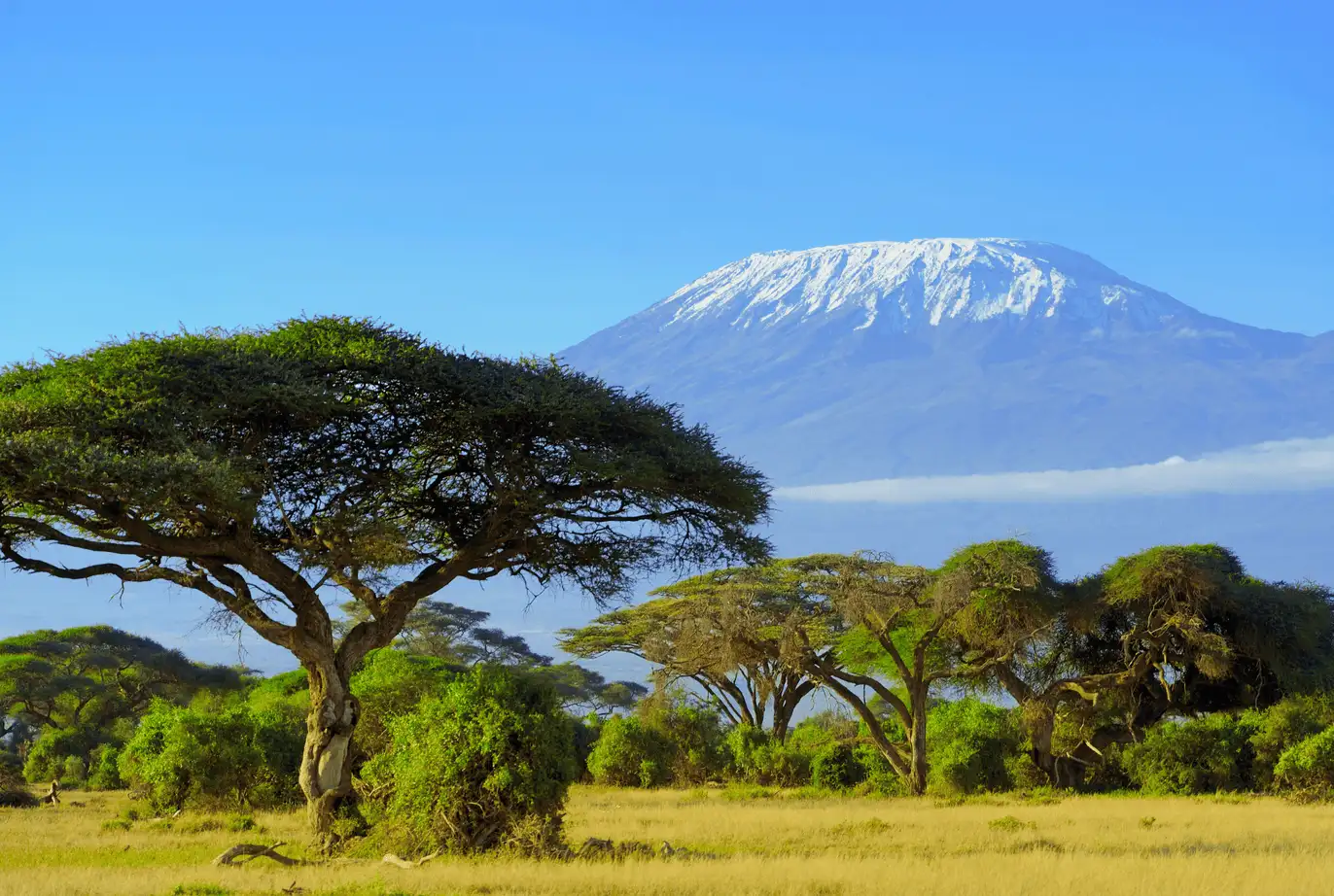
An Immersive Exploration with Mountains 2 Marshes Expeditions
Rising in magnificent isolation above the savannas of northern Tanzania, Mount Kilimanjaro National Park stands as one of Africa’s most extraordinary landscapes. At its heart towers Mount Kilimanjaro, the continent’s highest peak at 5,895 meters (19,341 feet), a mountain that draws adventurers, naturalists, and cultural travelers from around the world. The park spans 1,688 square kilometers of ecological diversity, cultural heritage, and geological wonder, making it a world-class destination for trekking and eco-tourism.
At Mountains 2 Marshes Expeditions, we guide travelers through the full spectrum of Kilimanjaro’s environments. From the humid rainforest alive with birdsong to the stark, icy summit where oxygen thins and the horizon stretches endlessly, the journey is both physically demanding and deeply rewarding. The mountain’s ecological staircase reveals an astonishing transition of climates, offering a rare opportunity to experience tropical, temperate, and arctic conditions within a single expedition.
History of Mount Kilimanjaro National Park
Mount Kilimanjaro’s significance extends far beyond its height. Officially gazetted as a national park in 1973, the region had long been respected as a sacred landscape by the Chagga people, who inhabited and cultivated its fertile lower slopes. These communities relied on the mountain’s volcanic soil and glacial meltwater for crops such as coffee and bananas, and their cultural identity remains deeply intertwined with Kilimanjaro’s presence.
In 1987, UNESCO recognized the park as a World Heritage Site, citing its ecological diversity, geological importance, and cultural history. Today, conservation efforts focus not only on preserving the mountain’s iconic ice cap but also on protecting the forests, endemic species, and watershed systems that support millions of people in the surrounding region.
Mountains 2 Marshes Expeditions supports these conservation goals through responsible tourism practices, educational trekking itineraries, and community partnerships.
Geography and Ecological Zones
Total Area: 1,688 square kilometers (652 square miles)
Elevation Range: 1,600 meters (5,249 feet) at Marangu Gate to 5,895 meters (19,341 feet) at the Uhuru Peak summit
Kilimanjaro’s unique vertical terrain forms distinct ecological zones:
Montane Rainforest Zone (1,600–2,800 meters)
Dense tropical forests thrive in the lower regions, home to colobus monkeys, blue monkeys, duikers, leopards, elephants, and hundreds of bird species. The forest also acts as a vital water catchment, feeding rivers and springs that support regional agriculture.
Heather and Moorland Zone (2,800–4,000 meters)
This zone features sprawling heather shrubs, towering senecios, and giant lobelias against dramatic open landscapes. Temperature swings become more extreme, and the vegetation adapts to cold nights and strong winds.
Alpine Desert Zone (4,000–5,000 meters)
A stark environment of volcanic sand, rock formations, and thin atmosphere. Vegetation is sparse, and temperatures shift dramatically between night and day.
Arctic Summit Zone (5,000–5,895 meters)
Defined by glaciers, ice fields, and snowy ridges, this zone offers some of the most breathtaking panoramas in Africa. Although Kilimanjaro’s glaciers continue to recede due to climate change, they remain an iconic part of the climb, drawing scientists and adventurers alike.
This natural progression of habitats makes a Kilimanjaro trek one of the world’s most diverse mountain experiences.
How to Reach Mount Kilimanjaro National Park
Despite its remote appearance, access to the park is straightforward.
By Air
Kilimanjaro International Airport (JRO) serves as the main gateway, receiving flights from Dar es Salaam, Zanzibar, Arusha, Nairobi, and international hubs. Domestic flight times range from 2 to 3 hours.
From Airport to Park
Travelers reach the major park gates—Marangu, Machame, Lemosho, Rongai, Shira, and Umbwe—within 45 to 60 minutes by road.
By Road
Arusha, the center of Tanzania’s northern safari circuit, is approximately 200 kilometers (124 miles) away, a journey of 4 to 5 hours depending on traffic and road conditions.
Mountains 2 Marshes Expeditions provides seamless transfers, ensuring a smooth transition from your arrival point to the mountain’s base.
Wildlife and Ecology
Although Kilimanjaro is globally known for trekking, the park is also rich in biodiversity.
Mammals
The rainforest hosts a surprising array of wildlife, including:
• Elephants
• Cape buffalo
• Bushbucks
• Blue and colobus monkeys
• Caracal and leopard (rare sightings)
• Rock hyraxes at higher elevations
Birdlife
With over 150 recorded species, the mountain is a paradise for bird enthusiasts. Key sightings include:
• Hartlaub’s turaco
• Malachite sunbird
• Crowned eagle
• Alpine chat
• White-necked raven
Flora
Kilimanjaro’s distinct climatic layers support species uniquely adapted to each altitude, creating a living laboratory for ecology enthusiasts.
Key Attractions and Highlights
Uhuru Peak
The highest point on Kilimanjaro and the ultimate goal for trekkers. The summit rewards climbers with panoramic views spanning Tanzania and Kenya. Reaching Uhuru typically requires 5 to 9 days, depending on route choice and acclimatization.
Glaciers and Ice Fields
Although shrinking, Kilimanjaro’s glaciers remain visually stunning. Trekkers encounter these formations in the final stages of the ascent, particularly around Stella Point and the summit plateau.
Chagga Villages and Cultural Landscapes
The mountain’s lower slopes are dotted with vibrant Chagga communities. Visitors can explore coffee farms, banana groves, and local homesteads while learning about cultural traditions, agricultural practices, and the mountain’s spiritual significance.
Activities Offered in Mount Kilimanjaro National Park
Trekking and Mountaineering
As the park’s primary activity, trekking routes vary in difficulty:
• Marangu Route (hut accommodations)
• Machame Route (challenging and scenic)
• Lemosho Route (high success rate and panoramic views)
• Rongai Route (quieter and gradual ascent)
• Umbwe Route (steep and demanding)
All treks at Mountains 2 Marshes Expeditions include certified guides, trained porters, chef support, acclimatization planning, high-quality tents, and safety monitoring.
Nature Walks
Not all guests seek the summit. Day hikes through the rainforest and moorland zones offer excellent opportunities for photography, birding, and nature study.
Cultural Excursions
Our cultural visits include:
• Chagga village tours
• Coffee tasting and farm experiences
• Local market explorations
• Storytelling sessions about mountain legends and folklore
Eco-tourism and Environmental Learning
Trekkers learn about glacier retreat, endemic species, and sustainable conservation strategies. Educational briefings are included in all expeditions.
Local Culture and Communities
The Chagga people are known for their warm hospitality, advanced irrigation systems, and cultural storytelling traditions. They have lived on Kilimanjaro’s slopes for centuries, cultivating coffee, bananas, and vegetables.
Visiting their communities offers:
• Insights into traditional homesteads
• Tasting of locally grown coffee
• Participation in cultural demonstrations
• Understanding of their connection to Kilimanjaro as a spiritual symbol
Mountains 2 Marshes Expeditions works closely with village cooperatives to ensure tourism benefits local families and cultural preservation.
Practical Information for Visitors
Why Choose Mount Kilimanjaro National Park
Mount Kilimanjaro National Park is more than a trekking destination; it is a natural monument rich in biodiversity, cultural heritage, and scenic beauty. Trekkers experience climates ranging from tropical warmth to arctic cold, witness dramatic geological formations, and walk through ecosystems shaped by millennia of evolution.
With Mountains 2 Marshes Expeditions, visitors gain not only a summit attempt but also a deeper understanding of the mountain’s ecology and cultural significance. Our expeditions emphasize safety, education, environmental responsibility, and meaningful cultural engagement, ensuring that every journey is both memorable and transformative.
Mount Kilimanjaro remains one of the world’s greatest mountain adventures, and we invite you to discover it with the guidance, expertise, and passion of Mountains 2 Marshes Expeditions.


Tel: +255 658 935 114
info@m2mtanzaniaexpeditions.com
sales@m2mtanzaniaexpeditions.com